
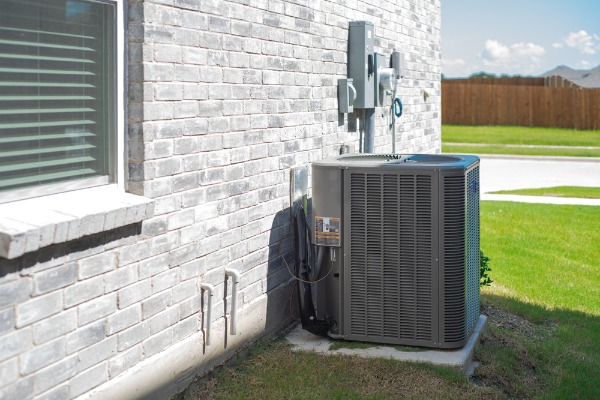
“How much you charge to clean a mini split?” — one of our most-asked questions, and fair: mini-splits are everywhere in Aurora now (basements, additions, garage conversions), and nobody explained the maintenance when they sold the install. Here's the real pricing, what a proper deep clean includes, how often each type of household needs it, and what's safe to DIY.
On this page
Why mini-splits need cleaning (more than central systems)
Mini-split indoor heads recirculate room air constantly across a cold, damp coil — it's a mold terrarium by design. Central systems hide this in a closet; mini-splits hang it on your wall where you smell it. The telltale sign: that musty “dirty sock” smell when the unit starts, or visible dark buildup on the blower wheel behind the louvers.
Beyond smell: a dirty blower wheel and coil cut airflow dramatically — we've measured 30%+ airflow loss on two-year-neglected heads. The system runs longer, cools worse, and the compressor works harder. Cleaning isn't cosmetic; it's the maintenance that protects the expensive parts.
What professional cleaning costs in 2026
Per indoor head, a professional deep clean in Aurora runs [TBD] depending on access and condition. That covers: blower wheel removal and washing, evaporator coil cleaning with proper (no-rinse, coil-safe) chemistry, drain pan and condensate line clearing, filter deep-clean or replacement, louver and cabinet wipe-down, and a full operational test after reassembly.
Multi-head systems: the per-head price usually drops for 2+ heads in one visit — ask when booking. A full 4-head deep clean typically lands at [TBD] total. Compare that against a blower motor or control board failure from chronic neglect, which runs multiples of the cleaning.
How often: the honest schedule
- Filters: rinse monthly yourself. They're designed for it — pop, rinse, dry, replace. Two minutes.
- Professional deep clean: every 12–18 months for typical households.
- Every 12 months if: pets (dander loads the wheel fast), allergies/asthma in the home, the head is in a kitchen (cooking grease + cold coil = grime concrete), or it runs year-round as primary heat.
- Every 24 months only if: single occupant, no pets, head in a rarely-used guest room. And even then, don't skip the filter rinses.
The mold-smell test: if it smells musty on startup, it's overdue regardless of the calendar.
DIY vs. pro: where the line is
DIY-safe: filter rinsing, wiping the cabinet and louvers, keeping the outdoor unit clear of debris, pouring vinegar down the condensate access if yours has one.
Pro territory: blower wheel removal (it's a precise, fragile assembly — bend it and it vibrates forever), coil chemistry (wrong cleaners corrode the fins), drain pan work behind the head, and anything electrical. The YouTube videos make wheel-pulling look easy; the wobbling, noisy aftermath of a bent wheel is a service call that costs more than the cleaning would have.
What to demand from a cleaning service
Ask before booking: does the price include blower wheel removal (not just spraying through the louvers)? Is the condensate drain cleared and tested? Will I get before/after photos? A “mini-split cleaning” that's a filter rinse and a spray bottle is a $200 wipe-down. The real service disassembles, washes, and verifies — and takes about 45–60 minutes per head.
The deep-clean process, step by step
So you know what you're paying for, here's what a proper mini-split deep clean looks like on one head, in order:
- Power down and protect. Breaker off, drop cloths down, and a wash bag fitted around the indoor head to catch every drop — your wall and floor stay dry.
- Disassembly. Filters, louvers, and front cover removed. The blower wheel — the cylindrical “squirrel cage” behind the louvers — is unmounted carefully. This is the skilled part: it's balanced precisely and bends easily.
- Coil cleaning. The evaporator coil gets a purpose-made no-rinse coil cleaner, worked in with a soft brush. No pressure washers, no household chemicals — both damage fins.
- Wheel wash. The blower wheel is washed separately (this is where the mold lives — you'll see brown-black sludge come off a neglected one) and dried fully before reassembly.
- Drain service. Drain pan scrubbed, condensate line flushed and flow-tested. A surprising number of “mystery leaks” are just this step skipped for three years.
- Reassembly and test. Everything remounted, torqued correctly, filters back in, power on, full cooling cycle with temperature-split verification.
Elapsed time: 45–60 minutes per head. If someone “cleans” your mini-split in 15 minutes, they did steps 1 and 6 and skipped the parts that matter.
What neglect actually costs
The cleaning feels optional until you price the alternative. Chronic neglect leads to:
- Blower motor failure — a grime-loaded wheel strains the motor until bearings or windings give out. Motor replacement: [TBD], versus [TBD] for the cleaning that would have prevented it.
- Control board damage — condensate overflow from a clogged drain drips onto electronics below. Boards: [TBD].
- Compressor strain — restricted airflow raises head pressure and shortens compressor life, the most expensive part in the system.
- Energy waste — that 30% airflow loss means 30% longer runtimes on every cycle, all summer, on your electric bill.
One skipped cleaning cycle rarely kills anything. Three skipped cycles is how a $200 maintenance item becomes a $900 repair. The math is as boring as it is consistent.
Smell that musty startup? It's time
Professional deep clean per head, before/after photos, full operational test. Multi-head discounts.
Frequently asked questions
Why does my mini-split smell musty?
Mold and biofilm on the damp blower wheel and coil — the classic sign a deep clean is overdue. The smell often fades after 10 minutes of running, which tricks people into ignoring it; the buildup doesn't go away on its own.
Can I use a regular household cleaner on the coil?
No — many household cleaners corrode aluminum fins or leave residues that trap more dirt. Coil cleaning needs purpose-made, no-rinse coil cleaner applied correctly. This is firmly pro territory.
Do the outdoor units need cleaning too?
Yes, but less often — keep vegetation 2 feet back, rinse surface debris gently, and have the coils professionally cleaned every few years or if you notice performance drop.
Will cleaning fix weak cooling?
If airflow restriction was the cause, often dramatically. If the system is still weak after a proper deep clean, the next suspects are refrigerant charge or a failing component — that's a diagnostic visit, not another cleaning.
How do I know if the last company actually deep-cleaned?
Ask for before/after photos of the blower wheel — a real deep clean documents it. And the smell test: a properly cleaned head has no musty odor on startup. If it still smells, the wheel wasn't really cleaned.
PROUDLY SERVING AURORA, CO 80011