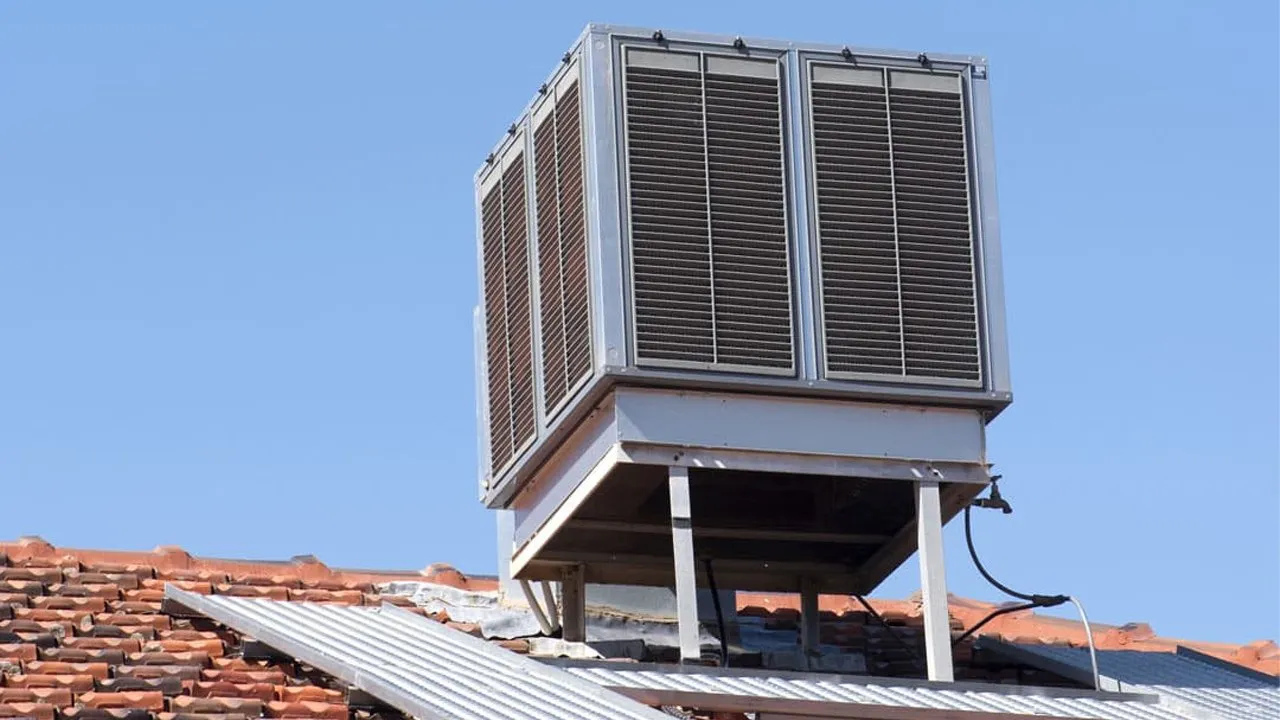
“Swamp coolers are cheap to run” is true right up until it isn't. A well-maintained cooler in good condition is the cheapest cooling in Colorado. A neglected, aging cooler is a money pit wearing a cheap-to-run costume — repair bills, water bills, pad replacements, and summers spent uncomfortable anyway. Here are the seven signs yours has crossed the line.
On this page
- 1. You're repairing it every summer
- 2. Your summer water bill makes you flinch
- 3. Pads, pads, pads
- 4. Monsoon season defeats it for weeks
- 5. The cabinet is rusting through
- 6. You're supplementing with window units or portables
- 7. You're selling within a few years
- The 2-minute scorecard
- The one-page math worksheet
1. You're repairing it every summer
A pump one year, a motor the next, a float valve the year after — when the cooler needs a service call every cooling season, add up three years of repair invoices. If that total is approaching half the cost of a full cooler replacement, you're funding a dying unit. And every one of those summers, you were also uncomfortable while waiting for the repair.
Rule of thumb we give customers: two significant repairs in three years on a 10+ year-old cooler means price the conversion, not the next repair.
2. Your summer water bill makes you flinch
Pull your July–August water bills and compare to winter. A cooler running 12 hours a day can use 100+ gallons daily — and Aurora's tiered water rates punish high summer usage exactly when the cooler drinks most. We've seen summer water bills where the cooler's share rivals what the electricity delta to AC would have been.
Do your own math: (summer water − winter water) × your per-gallon rate × 4 months. If that number surprises you, the “cheap to run” story needs updating.
3. Pads, pads, pads
Cooler pads are a consumable: annual replacement is the minimum, and hard Aurora water scales them up faster. Between pads, pump cleanouts, and the mid-summer “why does it smell like a pond” service call, annual cooler maintenance often totals [TBD] — every year, forever, on a unit that's depreciating.
Central AC maintenance is one annual tune-up. The maintenance-cost crossover is real and it surprises people.
4. Monsoon season defeats it for weeks
Every July–August, the monsoon pushes humidity up and your cooler pushes out lukewarm damp air. If you're running the cooler full-blast and the house still sits at 80°F+ with that sticky feeling, you're paying full operating cost for partial cooling. AC's cost buys actual results; the cooler's cost is buying hope during those weeks.
Count the defeated days last summer. If it was more than two weeks, that's two weeks you paid to be uncomfortable.
5. The cabinet is rusting through
Walk outside and look at the cooler cabinet. Rust at the pan, mineral stalactites, water stains down the side — that's a unit living on borrowed time. A rusted-through pan leaks onto the roof, and roof damage from a leaking cooler dwarfs any HVAC bill. If the cabinet's going, the decision is being made for you; the only question is whether you replace the cooler or convert.
6. You're supplementing with window units or portables
The bedroom window AC, the portable unit in the living room — add up what those cost to buy and run. Two window units running all summer can erase the cooler's entire operating-cost advantage while delivering worse comfort than one central system. If you've already bought supplemental cooling, you've voted with your wallet: the cooler isn't enough.
7. You're selling within a few years
Every summer month your home sits on the market with swamp-cooler-only cooling is a month of “we'll need to budget for AC” deductions from buyers. Conversion before listing typically returns in sale price and days-on-market what it costs — it's one of the few HVAC projects with genuine resale ROI in Aurora's market.
The 2-minute scorecard
Count your yeses: (1) yearly repairs, (2) painful water bills, (3) constant pad/pump spending, (4) monsoon misery, (5) visible rust, (6) supplemental window units, (7) selling soon. Three or more? Get a conversion quote. It's free, it takes 45 minutes, and it'll tell you exactly where your house lands. One or two? Keep maintaining the cooler — and we'll happily do that maintenance.
The one-page math worksheet
Do this on paper — it takes ten minutes and ends the debate:
- Annual cooler operating cost: (summer water bill increase × 4 months) + annual pad/service spending + last 3 years of repairs ÷ 3.
- Annual cooler discomfort cost: be honest — how many days last summer was the house uncomfortable? Multiply by what comfortable days are worth to you. (There's no wrong number; it's your house.)
- Pending cooler capital: if the unit needs a rebuild or replacement soon, that's [TBD] you'd spend to stay on the cooler path.
- Conversion cost (from our free assessment) minus pending cooler capital (line 3) = the true incremental cost of converting.
- Divide line 4 by (line 1 + line 2). That's your payback in years — counting comfort as value, which it is.
Most 80011 homeowners who do this honestly land at 4–8 years including comfort value, faster if the cooler needs capital work anyway. And unlike most home math, the comfort starts the first summer — not at “payback.”
Counted three or more? Get the free assessment
We'll check your cooler, your ducts, and your electrical — then give you both numbers: repair vs. conversion.
Frequently asked questions
How much does it cost to just replace the swamp cooler?
A new cooler installed typically runs [TBD] depending on size and roof vs. ground mount. Compare that against conversion — sometimes the gap is smaller than expected.
Can a cooler be made to work better instead of replacing it?
Sometimes: new rigid-media pads, a pump upgrade, and sealing duct leaks can revive a mid-life unit. We'll tell you straight during a maintenance visit whether yours is a tune-up candidate or a replacement candidate.
Does AC really use that much more electricity?
Yes — roughly 4–5× the watts per hour of cooling. But it also cools on the days the cooler can't, and precise cycling wastes less than a cooler running full-blast achieving nothing.
What about the water savings with AC?
AC uses no water for cooling — the condensate it produces is actually distilled water dripping away. In drought-conscious Colorado, that's a genuine environmental plus for conversion.
My cooler is only 6 years old but I'm already repairing it. Normal?
Not normal — a 6-year-old cooler needing frequent repair usually has an installation or water-quality issue (hard water scaling, bad float setup). Get it properly serviced once before deciding anything; the unit may have years left.
Does homeowner's insurance cover swamp cooler damage?
Sudden damage (hail, wind) is typically covered like any storm damage to the home; wear, rust, and age are not. Document storm damage with photos immediately — the same discipline as our AC storm guide applies to roof-mounted coolers.
PROUDLY SERVING AURORA, CO 80010