December's gas bill arrives, it's double November's, and nothing changed — same thermostat setting, same house. Before you blame the utility (rates do move, but they're rarely the whole story), run this audit. Nine causes, ranked from the 30-second check to the call-a-tech verdict, based on what we actually find in Aurora homes every winter.
On this page
First: read the bill like a tech
Don't compare dollars — compare therms used. Rates change; therms tell you whether your house actually burned more gas. Then check heating degree days — many Colorado gas bills print them, or compare against the same month last year. A colder December burns more gas legitimately.
If therms are up 10–15% in a comparably cold month, something in the house changed. If therms are flat but dollars are up, that's the rate — call the utility, not us. This two-minute check saves a lot of misdirected service calls.
Causes 1–3: the airflow trio (check these today)
1. Clogged filter. The #1 cause, every winter, no contest. A filter you can't see light through forces the blower to work harder and the furnace to run longer. Thirty seconds, a few dollars, often a 10%+ improvement.
2. Blocked returns or closed vents. Furniture against the return grille, vents closed in “unused” rooms — every restriction raises static pressure and makes the furnace labor. Open everything; walk the house.
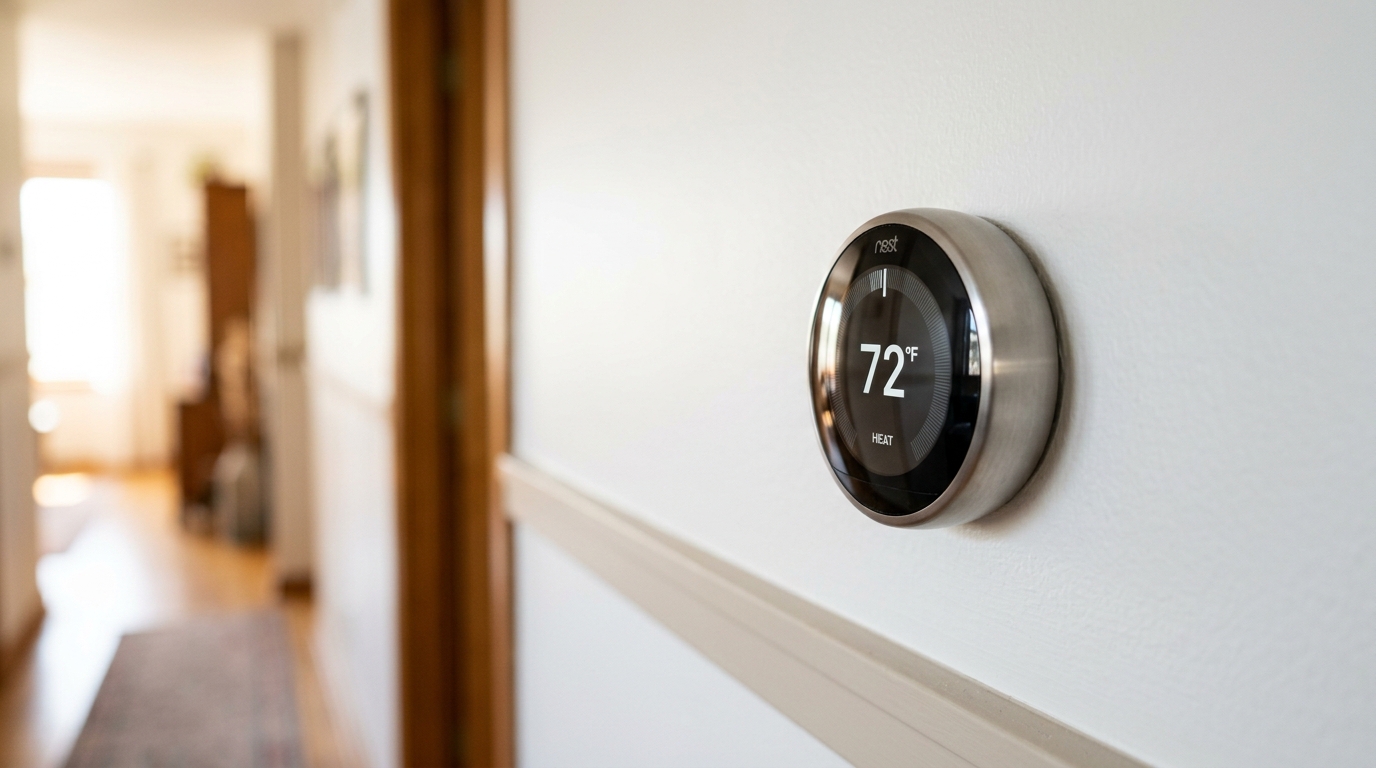
3. Thermostat location or settings. A thermostat in a drafty hall or above a heat source reads wrong and over-calls. And check the program: “hold at 72 around the clock” after years of setback scheduling will show up on the bill. A smart thermostat that learned bad habits is still a bad habit.
Causes 4–6: the house envelope
4. Duct leaks. The average older home loses 20–30% of heated air through duct leaks — into the attic, the crawlspace, anywhere but your rooms. The furnace burns gas to heat the attic. A duct inspection with a blower-door-style pressure test finds it; sealing is among the highest-ROI efficiency work that exists.
5. Attic insulation settled or thin. 80011's 1960s ranches often have original insulation that's settled to half its rated depth. Heat rises, literally out through the roof. If you can see the ceiling joists through the insulation, you're under-insulated.
6. Air leaks at the envelope. Recessed lights, attic hatches, plumbing penetrations, old windows — each is small, together they're a furnace running extra cycles all winter. The incense-stick test on a windy day (watch the smoke waver) finds the worst offenders free.
Causes 7–9: the equipment itself
7. Declining furnace efficiency. Dirty blower wheels, scaled burners, weak airflow — a neglected furnace can lose 10–15% efficiency without any single dramatic failure. This is the slow bleed that a tune-up reverses. If bills crept up over 2–3 winters, this is your prime suspect.
8. Short cycling. A furnace firing 5-minute cycles burns disproportionate gas on startup purges and never reaches steady-state efficiency. Causes range from overheating on a clogged filter (cheap) to an oversized unit (expensive, and common in builder-era installs).
9. Failing components working overtime. A dying blower motor drawing high amps, a gas valve drifting off spec — the furnace compensates by running longer. These show up on a tune-up's amp-draw and temperature-rise readings long before they fail outright.
Your action plan, in order
- Today: filter, vents, returns, thermostat program. (Free.)
- This weekend: the incense test for air leaks, attic insulation peek. (Free.)
- This month: fall tune-up with combustion and airflow readings — it catches causes 7–9 and quantifies 4–5. ([TBD], and the written report tells you which cause is yours.)
- If the tune-up finds duct leakage or thin insulation: get those quotes. They pay back faster than any equipment upgrade.
The punchline of every winter audit we do: it's rarely one dramatic thing. It's three small things compounding. Fix the stack and the bill comes back down.
When high bills mean 'replace,' not 'repair'
Sometimes the audit's conclusion isn't a fix — it's a verdict. Consider replacement when the high bills come with:
- Age 18+ with declining efficiency — the tune-up recovers some, but the exchanger and components are past their design life. You're paying premium fuel prices to run a worn machine.
- Repair quotes stacking up — this winter's $600 repair plus last winter's $400 plus rising gas bills: run the $5,000 rule from our repair-vs-replace guide.
- Comfort failure on design days — if the furnace runs constantly below 10°F and still loses ground, it's undersized or worn out. No tune-up fixes capacity.
- The efficiency gap is large — a 1980s 65–70% furnace vs. a modern 96%: that's a quarter of your gas bill going up the flue. At that gap, the payback math actually works.
The honest sequence: audit first (this post), tune-up second (recovers what's recoverable), and only then — with numbers in hand — the replacement conversation. Never let anyone skip to step three.
Get the winter audit done right
Fall tune-up with airflow and combustion readings — we'll find which of the nine is yours and show you the numbers.
Frequently asked questions
My bill doubled but I didn't change anything. Emergency?
Check therms vs. last year first — a much colder month explains a lot. If therms truly doubled in similar weather, that's a malfunction (stuck gas valve, control failure) worth a prompt call, not panic.
Will a smart thermostat lower my bill?
Only if it changes behavior — setbacks while you're away/asleep save 5–10%. A smart thermostat holding 72° 24/7 saves nothing over a dumb one doing the same. The schedule matters, not the gadget.
Does closing vents in unused rooms save money?
No — on modern forced-air systems it raises static pressure, reduces efficiency, and can overheat the heat exchanger. Keep vents open; savings come from the thermostat schedule, not vent roulette.
How much can a tune-up actually save on gas?
A neglected furnace commonly regains 5–15% efficiency from cleaning, calibration, and airflow correction. On a $200/month winter gas bill, that's $10–$30/month — plus the breakdown you prevented.
Should I compare bills with my neighbor?
Only loosely — insulation, furnace age, thermostat habits, and even which side of the street (solar gain) vary enormously. Your own bill's history is the only fair baseline.
Can the gas company audit my usage?
Many utilities offer free home energy audits or rebates for insulation and sealing — call and ask. Their audit complements ours: they see the house, we see the equipment. Do both.
The bottom line: high heating bills are usually a stack of small problems, not one big one — a clogged filter plus leaky ducts plus a neglected furnace compounds fast. Work the audit in order: free checks today, the tune-up this month, insulation and duct sealing by the numbers. Fix the stack and the bill comes back down — and you'll know exactly which layer was yours.
PROUDLY SERVING AURORA, CO 80011