Safety · Aurora, CO
Furnace Safety & CO Inspection in Aurora, CO
Carbon monoxide testing, heat-exchanger inspection, and gas-safety checks — for the 20+ year old furnaces all over north Aurora. Inspection [TBD] · written safety report included.
Why this page exists
Carbon monoxide doesn't announce itself
Here's the uncomfortable truth about north Aurora's housing stock: a huge number of furnaces in 80011, 80010, and 80012 are 20–30+ years old. The part that fails dangerously on an old furnace is the heat exchanger — and a cracked heat exchanger can push carbon monoxide into your home's air. CO is colorless and odorless. You will not smell it. You will not see it. The furnace will keep running like nothing is wrong.
Watch for these signs
Soot streaks around the furnace · burner flame that's yellow or flickering instead of steady blue · excessive condensation on windows · rust on the flue pipe · headaches, dizziness, or nausea that ease when you leave the house.
What we test
Ambient CO in living spaces and at the furnace · heat exchanger integrity (visual + combustion analysis) · flue draft and venting · gas-line leak check · rollout, limit, and pressure-switch safeties.
What you get
A written safety report with actual readings — not "looks fine." If anything fails, you get the finding, the risk explained plainly, and the fix priced in writing. If the exchanger is cracked, the unit is red-tagged on the spot.
What's included
The safety inspection checklist
- Heat exchanger inspection — visual, mirror/camera, and combustion-analysis readings. The single most important check on an older furnace.
- Carbon monoxide testing — ambient readings at the furnace, in the supply plenum, and in living spaces near bedrooms.
- Flue & venting inspection — draft test, flue integrity, blockage check. Colorado snow can block high-efficiency vents mid-winter.
- Gas-line leak test — supply piping, valve, and connections checked with a combustible-gas detector.
- Safety controls verified — rollout switch, high-limit, pressure switch: the devices that shut the furnace down before it hurts anyone.
- Burner & flame analysis — flame pattern, color, and combustion numbers documented.
- CO detector audit — placement, age, and battery status of your detectors. Detectors over 7 years old get replaced on recommendation.
- Written safety report — every reading, every finding, in writing. Keep it with your home records.
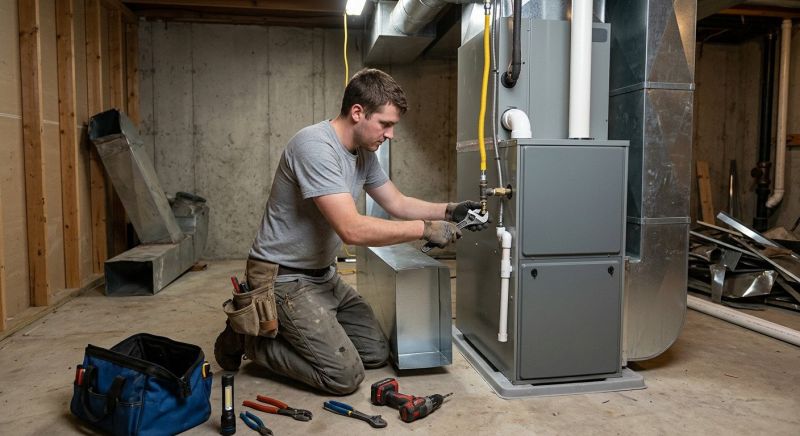
SAFETY INSPECTION · 80011 · OCT 2026
The Colorado angle
Why old furnaces + Colorado winters = higher stakes
Three local factors stack the risk in north Aurora:
- Age of the stock. 1950s–70s homes with original or second-generation furnaces — heat exchangers in the crack-risk window.
- Long heating seasons. Colorado furnaces run hard for 6+ months. More run-hours = more thermal cycling = more exchanger stress.
- Tight winter homes. Sealed-up houses with blocked-off vents change combustion-air dynamics. A furnace that was "fine" for years can become marginal when the house gets tightened up.
- Snow-blocked vents. High-efficiency furnace exhaust vents exit low on exterior walls — drifting snow can block them mid-storm, tripping safeties or worse.
None of this means your old furnace is dangerous. It means it deserves a documented inspection instead of a hope and a prayer. Pair it with the winter-prep tune-up and both visits happen in one appointment.
| Service | Price | Notes |
|---|---|---|
| Furnace safety & CO inspection | [TBD] | Full checklist above + written safety report |
| Safety inspection + winter tune-up (bundle) | [TBD] | One appointment, full safety + performance visit |
| CO detector supply & install (each) | [TBD] | Hardwired or battery, placed to code |
How it works
Book → inspect → report → sleep better
Book
Call (303) 568-5036 or book online. Mention the furnace's age if you know it — the tech will bring the right test gear either way.
Inspect
60–90 minutes: exchanger, CO readings, flue, gas line, safeties, detectors. Methodical, documented, no shortcuts.
Report
Written safety report with every reading. Pass, watch-items, or fail — explained in plain English with the actual numbers.
Act
If anything needs fixing, it's priced in writing for your approval. If the exchanger failed, we walk you through replacement — including financing.
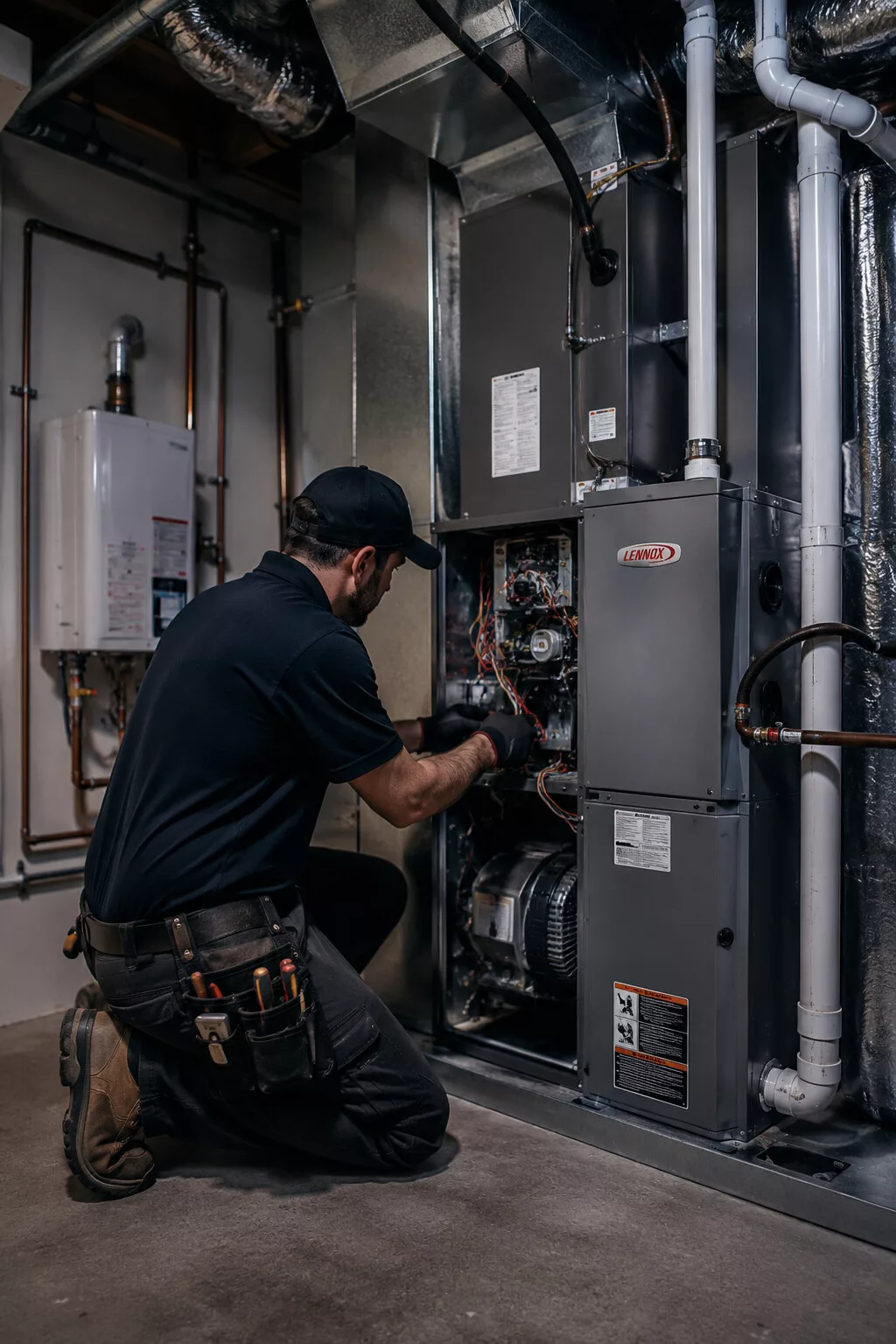
Treats every old furnace like it might be the one. He'll show you the readings on the meter, not just tell you "it's fine."
Service areas
Safety inspections across north Aurora
Aurora, CO 80011
Highest concentration of 20+ year old furnaces we serve — our priority inspection routes.
80011 DETAILS →Aurora, CO 80010
Northwest Aurora's oldest stock — inspections strongly recommended here.
80010 DETAILS →Aurora, CO 80012
Central Aurora — bundle with a tune-up before winter.
80012 DETAILS →Safety FAQs
Asked by careful homeowners
What is a furnace safety inspection?
A visit dedicated to the dangerous failure modes: heat-exchanger integrity, carbon monoxide readings, flue and venting, gas-line leaks, and safety-control function. It ends with a written safety report — actual readings, not a thumbs-up. It's the visit for anyone with a 20+ year old furnace, or anyone who wants documented peace of mind before winter.
How would I know if my furnace is leaking carbon monoxide?
You probably wouldn't — that's the problem. CO has no smell and no color. Clues: soot around the furnace, a yellow/flickering burner flame (healthy flames are blue and steady), unusual condensation on windows, or headaches/nausea that fade when you leave home. Working CO detectors on every floor are your early warning — and this inspection is the professional verification.
How much does it cost?
The inspection price is published in the table above, and bundling it with the winter-prep tune-up saves you a second appointment. Given what's at stake, it's the cheapest safety money a homeowner with an old furnace can spend.
My furnace is 25 years old but runs fine. Is it safe?
"Runs fine" and "is safe" are different questions — a cracked heat exchanger doesn't stop the furnace from heating. Age puts it in the risk window, but only an inspection gives you a documented answer. If it passes, you get a written report saying so. If it fails, it gets red-tagged and we talk replacement with real numbers and financing.
What happens if you find a cracked heat exchanger?
We red-tag the furnace — it's shut down and legally can't run until fixed. Then we walk you through your options: heat-exchanger replacement (rarely economical on old units) vs. full furnace replacement, with itemized quotes and financing. No scare tactics, just the facts and the numbers.
Book a safety inspection
Know your furnace is safe this winter
Call (303) 568-5036 or book online.
Related: Heating services · Furnace tune-up · Furnace repair · Pricing