
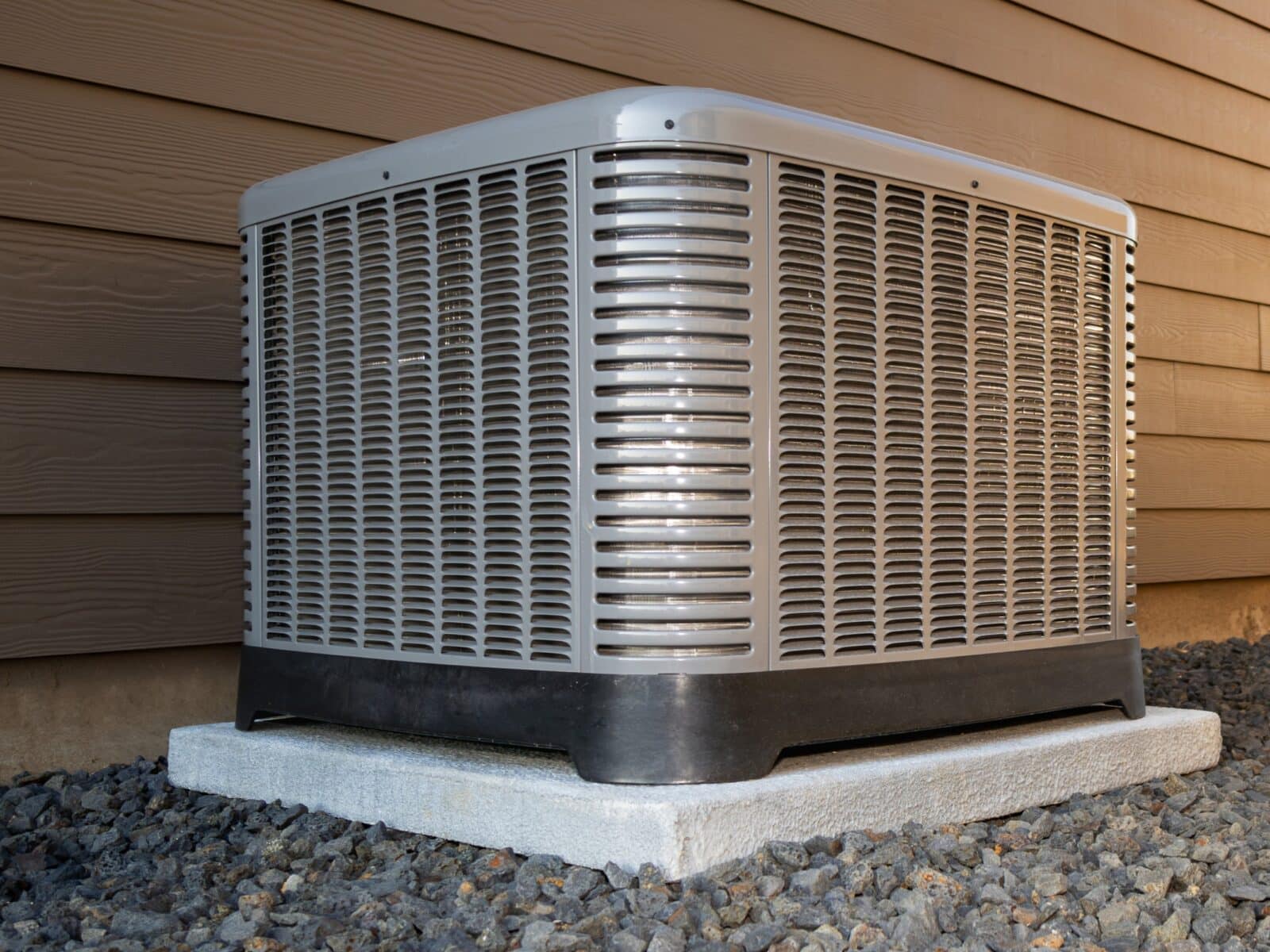
Furnaces get October; air conditioners get March. Same logic: service it before the season that punishes neglect. Here's what a real AC tune-up includes (it's a longer list than most companies admit), what it should cost in Aurora in 2026, and the best week to book it.
On this page
What's included in a real AC tune-up
Our cooling tune-up checklist:
- Condenser coil cleaning — dirty coils are the #1 efficiency killer; we wash, not just rinse
- Refrigerant charge verification (superheat/subcooling readings, not a guess)
- Capacitor and contactor testing — the two parts that cause most “AC won't start” calls
- Blower wheel and motor inspection, amp draws vs. nameplate
- Condensate drain clearing and pan treatment — the clog that floods ceilings every July
- Thermostat cooling calibration and cycle check
- Electrical connections tightened, inspected for heat damage
- Refrigerant line insulation check
- Temperature split measurement (supply vs. return — should be 16–22°F)
- Full cooling cycle test with written readings
Same standard as our furnace tune-up: if there are no written readings, it didn't happen.
What it should cost
A legitimate AC tune-up in Aurora runs [TBD] — the full checklist above, 60–75 minutes, written report. The $49 AC special is the cooling-season version of the furnace door-opener: a sales visit with a thermometer. Ask what readings you'll receive; the answer tells you everything.
Compare against the alternative: a failed capacitor on the first 95°F Saturday means emergency rates and a house that won't cool until Monday. The tune-up finds the weak capacitor in March.
When to book: the March window
Book March to mid-April. Reasons: schedules are open (same-week appointments), parts are in stock, and if the tune-up finds a real problem — a leaking coil, a dying compressor — you have weeks to decide, not hours in a heat wave. Every year, the last week of May brings the first 90°F stretch and our schedule flips to emergency triage. March you is doing June you an enormous favor.
Converted-from-swamp-cooler homes: your first spring with AC, get the tune-up even though the system is new — it verifies the install charge and catches anything the first season exposed.
“It looks like it needs some Freon” — the refrigerant talk
We hear this one a lot — “it looks like it needs some Freon” — and here's the truth: refrigerant isn't consumed. A system that needs refrigerant has a leak, full stop. Topping off without finding the leak is renting cold air by the pound.
A real tune-up verifies the charge with superheat/subcooling numbers. If it's low, we find the leak (electronic detection, nitrogen pressure test), quote the repair, and recharge to spec. Anyone who offers to “just add a pound or two” without leak-checking is selling you next summer's recharge too.
Note: if your system still runs R-22 (“Freon” proper), it's 2026 — that refrigerant is phased out and expensive. A leak on an R-22 system is often the economic nudge toward replacement; we'll show you that math honestly.
What you can do yourself
- Replace/clean the filter before the tech arrives.
- Clear vegetation 2 feet around the condenser; hose off visible debris (gentle — don't bend the fins).
- Pour a cup of white vinegar down the condensate drain access to discourage the July clog.
- Don't open the electrical panel or touch refrigerant lines. The $200 you save isn't worth the risk.
Tune-up vs. repair: knowing which you're buying
Companies blur this line on purpose, so here's the bright line: a tune-up is scheduled maintenance on a working system — cleaning, testing, measuring, adjusting. A repair fixes something that's broken. The tune-up finds the weak capacitor; the repair replaces it after it dies.
Where it gets murky: the tune-up that “finds” $1,400 of urgent repairs on a 6-year-old system. Sometimes that's legitimate (neglected systems do accumulate problems). Sometimes it's the business model. Your defense is the written readings: a capacitor testing at 60% of rated capacitance is a fact you can verify, not a vibe. Ask to see the meter. A tech proud of their diagnosis will show you.
And the reverse scam: the “free tune-up with repair” where the repair was invented to justify the visit. If a tune-up visit ends with a repair quote, ask which reading failed and what the spec is. Real findings have numbers.
The May emergency price vs. the March tune-up price
Let's make the seasonal economics concrete. March tune-up: [TBD], scheduled at your convenience, problems found early. First-95°F-weekend emergency call: after-hours diagnostic ([TBD]) plus the same repair at emergency scheduling, plus 2–4 days of a hot house while you wait for a slot.
The repair itself usually costs the same either way — a capacitor is a capacitor. What changes is everything around it: your comfort, your schedule, and whether the part is on the truck (March: yes; peak season: maybe). The tune-up isn't buying a cheaper capacitor. It's buying the capacitor on your terms instead of the heat wave's.
Beat the May rush — book the March tune-up
Full cooling checklist, written readings, scheduled while appointments are still same-week.
Frequently asked questions
Do I need a tune-up every year for AC too?
Yes — annual cooling maintenance is also a warranty requirement for most manufacturers, and it's what catches the weak capacitor before the heat wave does.
My AC is brand new. Does it still need a tune-up?
The first spring after install, yes — it verifies charge and installation quality. After that, annually like everything else.
What's a good temperature split?
16–22°F between return and supply air is the healthy range. Below 14°F with a clean filter means low charge, weak airflow, or a struggling compressor — all tune-up findings.
Can I just hose off the condenser myself instead?
You can rinse surface debris, and it's helpful — but coil cleaning from the inside, electrical testing, and charge verification need a tech. The hose is maintenance; the tune-up is diagnostics.
Is a spring tune-up enough, or do I need fall service too for AC?
AC needs one annual service — spring. Fall service is for the furnace. If you have both, that's the twice-yearly rhythm: furnace in October, AC in March.
My AC runs fine. Is the tune-up still worth it?
That's exactly when it's worth it — the tune-up's job is finding the weak capacitor and the slow leak while they're cheap, scheduled findings. “Runs fine” is what every system says right before the first 95°F weekend exposes what was weakening all spring.
The bottom line: the March tune-up is the cheapest air conditioning you'll buy all year — not because the service is cheap, but because of what it prevents. A weak capacitor found in March is a scheduled $200-ish visit; the same capacitor dying on the first 95-degree Saturday is an emergency call in a hot house. Book it while the calendar's open.
PROUDLY SERVING AURORA, CO 80013