This is the least comfortable post we'll write and the most important one. North Aurora's housing stock — 1958–1973 ranches, many on furnaces 15–20+ years old — is exactly the profile where cracked heat exchangers happen. A cracked exchanger can push carbon monoxide into your home's air supply. CO is odorless and colorless. You cannot smell it, see it, or “get used to it.” Here's the full safety briefing.
On this page
Where CO comes from in a home furnace
Your gas furnace burns natural gas in a sealed chamber — the heat exchanger. Combustion byproducts, including carbon monoxide, stay inside the exchanger and exit through the flue. The system is safe as long as the exchanger is intact.
Heat exchangers crack from thermal fatigue: 15–20 years of heating up and cooling down, twice a day, every winter. Once cracked, the blower that pushes your warm air can pull combustion gases through the crack and into the supply ducts. The furnace keeps heating. Nothing looks wrong. That's what makes it dangerous.
Symptoms: what CO poisoning feels like
Early CO exposure mimics the flu: headache, dizziness, nausea, confusion, fatigue. The telltale difference: everyone in the house feels sick at the same time, and everyone feels better after leaving the house for a while. Pets getting sick too is another red flag — they're smaller and show effects first.
If the furnace is running and multiple people develop headaches or nausea that ease outdoors: get everyone (and pets) out, call 911, then call us. Do not “wait and see” with carbon monoxide. Do not go back in to turn the furnace off yourself if you feel impaired — firefighters do that part.
Detectors: placement, maintenance, expiration
Colorado requires CO detectors in most homes, but “having one” and “being protected” aren't the same:
- Placement: one on every level, especially near sleeping areas and within 15 feet of the furnace room door. Not in the furnace room (nuisance alarms) and not in the garage.
- Expiration: detectors die after 5–7 years — check the manufacture date stamped on the back. An expired detector is a plastic decoration.
- Testing: the test button only checks the horn, not the sensor. If it's past date, replace it; testing can't resurrect a dead sensor.
- What the alarm means: get out first, then investigate. Never assume it's a false alarm because “the furnace seems fine.”
Furnace warning signs that warrant a CO check
Call for a safety inspection promptly if you notice:
- Soot streaks around the furnace cabinet or vent connections
- A yellow, lazy burner flame instead of crisp blue (peek through the sight glass — don't open anything)
- Rust or corrosion on the flue pipe or furnace cabinet
- Moisture or condensation on windows near vents when the heat runs
- The pilot or burners going out repeatedly
- Anyone getting headaches only when the heat is running
Any one of these on a 12+ year-old furnace is worth a dedicated safety inspection, not just a tune-up.
What our furnace safety inspection covers
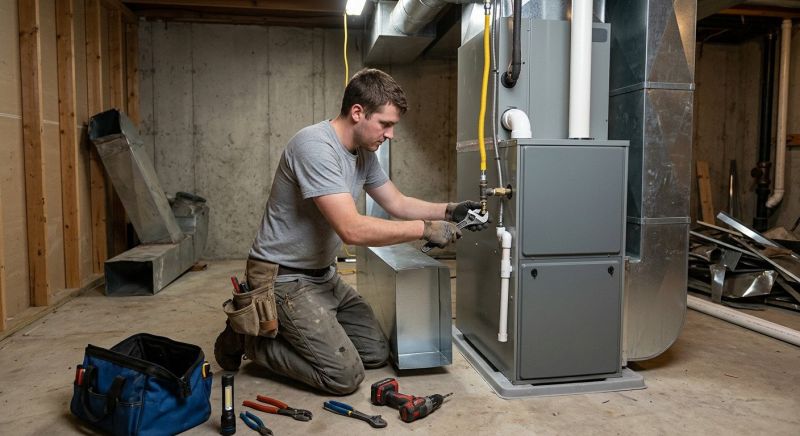
Our safety inspection goes beyond the tune-up's exchanger check: camera-scope examination of every accessible exchanger cell, ambient CO readings at multiple registers and in the furnace room, flue draft test, gas pressure verification, and a written report with photos you keep. If we find a cracked exchanger, we shut the furnace down — we'd rather have that conversation in October than have the fire department have it in January.
A cracked heat exchanger almost always means furnace replacement, not repair. We'll show you the crack on the camera screen so you're deciding on evidence, not trust.
Renters and landlords: CO responsibilities
Colorado law requires CO detectors in most residential properties — and the responsibility splits:
- Landlords must provide working CO detectors and maintain fuel-burning appliances. If you're renting in north Aurora and there's no detector, or the furnace hasn't been serviced in years, that's a written request to your landlord, not a DIY project.
- Tenants: test the detectors, replace batteries, and report furnace problems (new smells, soot, frequent shutdowns) immediately in writing. Don't let a landlord defer a “we'll look at it” through winter.
- Buyers: a furnace safety inspection is the best $200-ish you'll spend during due diligence on a 1960s Aurora home. General home inspectors glance at furnaces; a camera-scope exchanger exam is a different level of certainty.
Property managers with multiple 80011 rentals: annual safety inspections across the portfolio cost less than one CO incident's liability. This isn't marketing — it's risk management.
Furnace over 12? Get the safety inspection
Camera-scope heat exchanger exam, CO readings, written photo report. The inspection that actually protects your family.
Frequently asked questions
Can a cracked heat exchanger be repaired?
Technically sometimes, practically no — the labor to replace an exchanger approaches the cost of a new furnace, and the rest of the unit is still 15+ years old. Replacement is the honest recommendation.
My CO detector has never gone off. Am I safe?
Not necessarily — check its age first. And detectors are the backup system; the annual exchanger inspection is the primary one. You want both.
Does a tune-up include CO testing?
Ours does — ambient CO readings at the registers are point #11 on our 21-point checklist. But a tune-up is maintenance; if your furnace is 15+ or showing warning signs, book the dedicated safety inspection.
What should I do if the alarm goes off at 2 AM?
Get everyone out immediately — don't open windows first, don't hunt for the source. Call 911 from outside. Then call us; we'll inspect the furnace before it's restarted.
Are newer furnaces safer?
Yes — sealed combustion and better exchanger designs help, and high-efficiency units have pressure switches that shut down on venting problems. But “newer” still needs its annual check.
I have a CO detector but it's 9 years old. Replace now?
Yes — today, not this weekend. Nine years is past every manufacturer's rated sensor life. A $30 detector from the hardware store, installed in ten minutes, is the highest-ROI safety purchase in your home.
The bottom line: carbon monoxide is the one furnace risk you can't see, smell, or feel — which is why it gets two layers of defense, not one. Annual heat-exchanger inspection is the primary layer; working, unexpired CO detectors on every level are the backup. If your north Aurora furnace is 12+ years old and hasn't been scoped, that appointment matters more than any other on this site.
PROUDLY SERVING NORTH AURORA · 80011